Is Sammamish Walkable? What to Know Before You Move
Sammamish, Washington, is celebrated for its outstanding schools, scenic natural beauty, and proximity to the region's largest tech employers. But if you are relocating from a city...

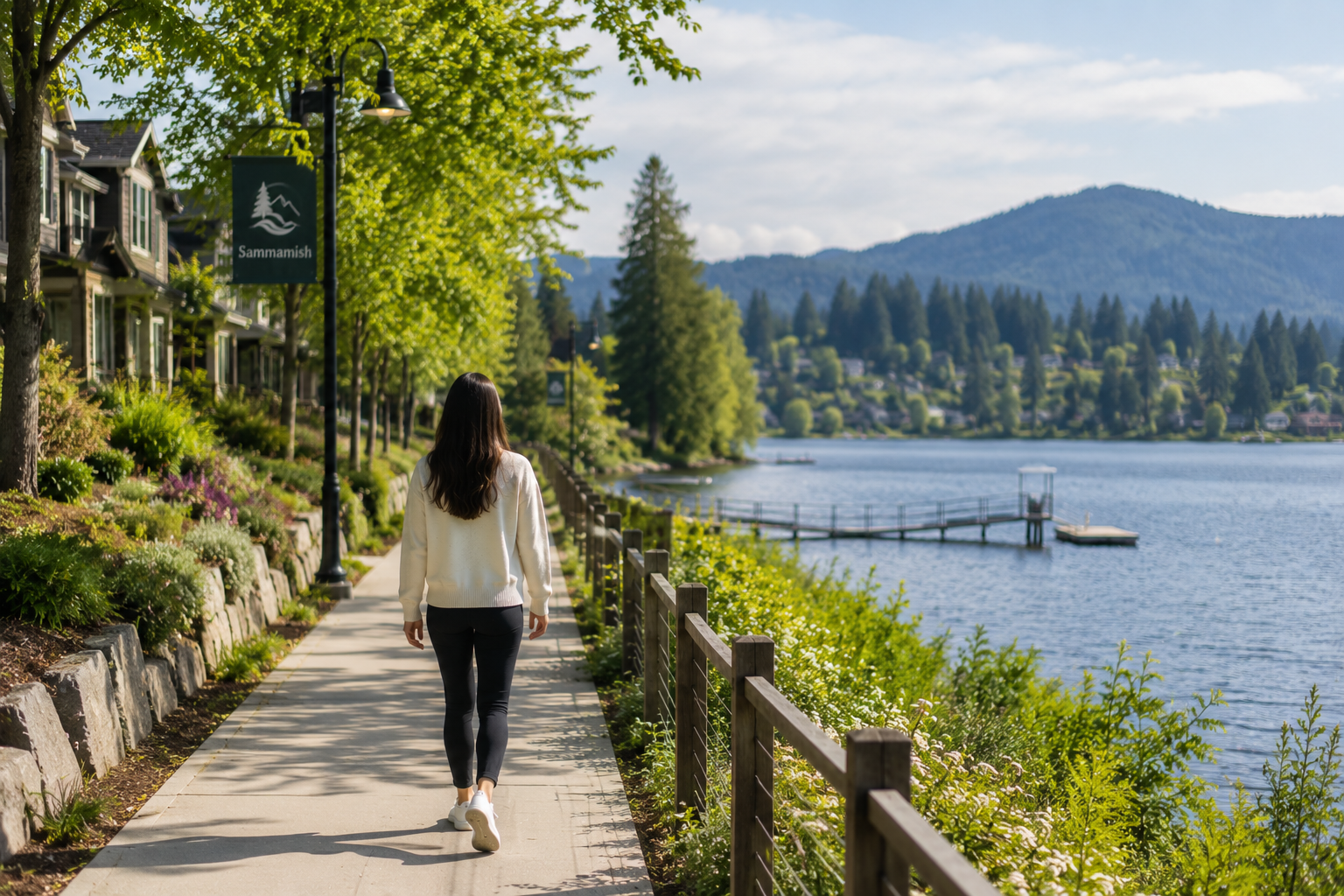
Sammamish · Community Photo
Sammamish, Washington, is celebrated for its outstanding schools, scenic natural beauty, and proximity to the region's largest tech employers. But if you are relocating from a city where you routinely run errands on foot or commute to a coffee shop without getting behind the wheel, one question deserves an honest answer before you commit to a neighborhood: is Sammamish actually walkable?
The Honest Answer: It Depends on Where You Live
Sammamish is a suburban community built largely around the automobile. Its Walk Score hovers in the 20–40 range for most neighborhoods, meaning that daily errands almost always require a car. There is no traditional downtown grid, and the city's topography — rolling hills, cul-de-sacs, and wide arterial roads — was designed with drivers in mind.
That said, walkability in Sammamish is not uniform. Certain pockets of the city offer genuine pedestrian access to shops, trails, and services, and the city has been actively investing in sidewalk connections and multi-use path infrastructure.
Where Sammamish Is More Walkable
A few areas stand out for residents who prioritize getting around on foot.
Sammamish Town Center is the city's most walkable zone. This mixed-use development near 228th Avenue SE brings together groceries, restaurants, fitness studios, and retail in a format where parking your car once and walking to multiple destinations is genuinely feasible. For residents living within a short drive or bike ride of Town Center, daily errands become significantly more manageable without a car.
Klahanie offers a neighborhood-scale walkability that many suburban communities lack. This master-planned community has its own shopping center, parks, and internal trail connections, so residents can walk to essentials within the neighborhood even if a car is still needed for broader errands.
Beaver Lake and Pine Lake areas benefit from proximity to trail systems and paved paths that connect to the broader Sammamish trail network, making recreational walking and light commuting on foot or by bike more practical.
Trails and Recreation: Where Sammamish Truly Shines
While Sammamish may not rival urban neighborhoods for pedestrian access to everyday services, it is exceptional for recreational walking. The Sammamish River Trail and its connections to the East Lake Sammamish Trail offer miles of paved, multi-use paths ideal for walking, running, and cycling. Lake Sammamish State Park provides waterfront access and extensive trail options.
For residents who define walkability in terms of being able to lace up their shoes and head somewhere beautiful on foot, Sammamish genuinely delivers. The distinction is between lifestyle walking and errand walking — Sammamish excels at the former.
What to Expect from Daily Life Without a Car
Residents who move to Sammamish without reliable vehicle access will face real challenges. Grocery stores, medical offices, and most services require driving or preplanned transit connections. King County Metro serves parts of Sammamish, but bus frequency and coverage are limited compared to closer-in communities. For most households, having at least one car is a practical necessity.
Tips for Finding the Most Walkable Spot in Sammamish
Research neighborhood-level walk scores before committing to a specific address. Proximity to Sammamish Town Center, Klahanie Village, or the East Lake Sammamish Trail corridor will make a meaningful difference in day-to-day walkability. Visiting during a weekday to observe pedestrian infrastructure, sidewalk continuity, and crossing safety is always worthwhile. And if biking is an option, pairing a bicycle with Sammamish's trail network dramatically expands your car-free range.
The Bottom Line
Sammamish is not a walkable city in the urban sense, and buyers relocating from transit-rich metros should set expectations accordingly. But within its suburban context, pockets of the city — particularly around Town Center and Klahanie — offer real pedestrian convenience, and the trail network makes Sammamish one of the finest communities in the region for those who walk or bike for recreation and fitness.
Planning your move to Sammamish? Connect with Ed Laine for neighborhood-specific guidance and dedicated relocation support. Start your search at eXplore Sammamish.
Every Thursday — local news, events, deals, and new listings. Free forever.